Cawan from Nature
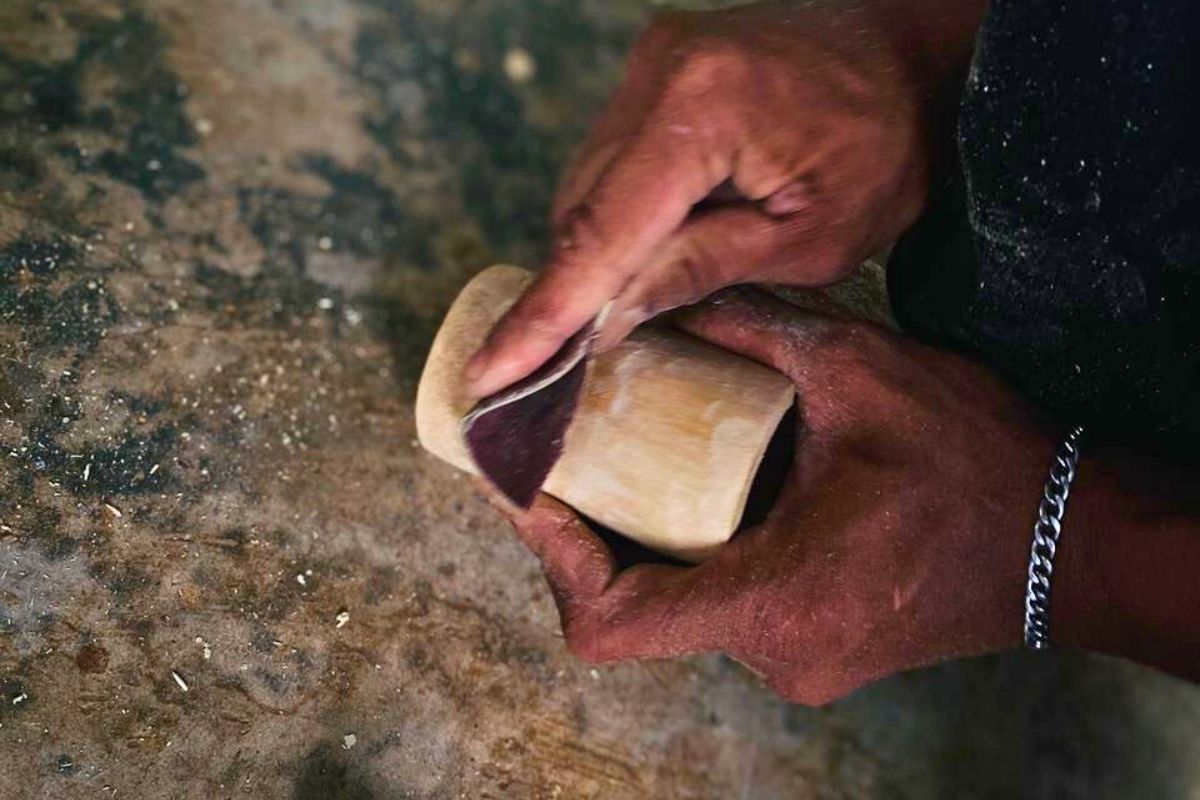
Antoni's hands were so meticulous in smoothing the bamboo with an electric sander, following the curve of the cup that was slowly forming in front of him. Fine dust flew every time the machine touched the surface of the bamboo, while he adjusted the pressure to keep the rim of the cup round and circular. Occasionally, Antoni touched the result of his work with his fingertips, making sure the surface was completely smooth before continuing with the final process of making this bamboo cup.
“This isn’t smooth enough,” he says, shifting to manual sanding with fine sandpaper, gently rubbing the bamboo until its surface feels completely soft to the touch.
Beside Antoni, his colleague Baim is busy cutting bamboo, preparing it to become a matching handle. Once shaped, the handle is carefully fitted to the body of the cup, tried repeatedly until it sits comfortably in the hand. Antoni then joins the two parts, ensuring the connection is sturdy and balanced. Before long, a bamboo cup takes form simple, functional, and environmentally friendly.
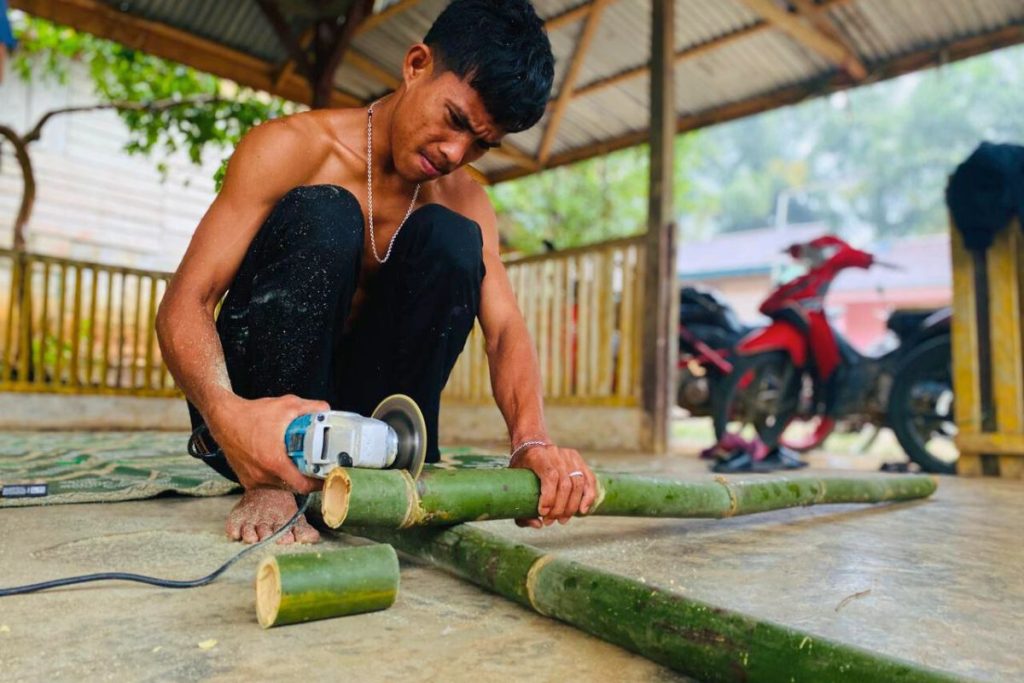

Baim is cutting bamboo that will be made into cups. Photo: Annisa Majesty Kasturi/Pundi Sumatra
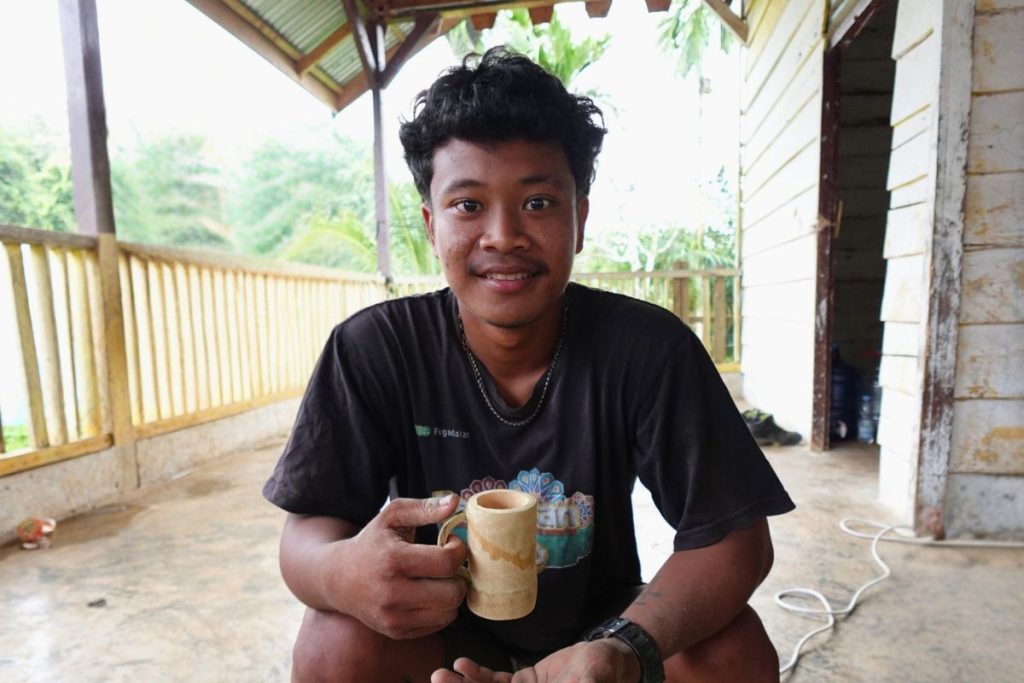
“For display, it’s better to finish it with natural oil so it looks glossy, but for drinking, it can be used right away,” Antoni explains. Bamboo cups like this have long been used by the Indigenous Suku Anak Dalam community when they still lived deep in the forest, serving as simple and practical drinking vessels made from bamboo readily found in the wild.
These bamboo cups began to be developed as handicraft products by the SAD Rombong Nuraini community when Pundi Sumatra, through the IFAD (International Fund for Agricultural Development) program, initiated community assistance activities. The program aims to strengthen food security while improving the economic conditions of Indigenous communities by promoting local wisdom. Through the Suku Anak Dalam youth group, Gerakan Pemuda Anak Dalam (GPAD), young community members are trained to become bamboo cup artisans.
Over time, the living space of the Suku Anak Dalam community has continued to shrink. Forest conversion, plantation expansion, and industrial activities have increasingly limited their access to traditional livelihoods. Forests that once served as living spaces, sources of food, and cultural foundations are gradually disappearing. In this context, crafting bamboo into marketable products is not merely a choice, but a means of survival. Through bamboo cups, SAD youth seek alternative sources of income that remain rooted in local knowledge, without completely severing their relationship with nature.
According to Antoni, the abundance of bamboo around the remaining forest areas is a key foundation for this craft. Bamboo grows naturally along forest edges, old gardens, and riverbanks. However, not all bamboo can be used. Initially, they selected bamboo that was neither too young nor too old, as its texture was considered strong yet easy to shape.
Recognizing this potential, Yoga, a field facilitator, invited Suku Anak Dalam youth from Pulau Lintang Village to conduct a comparative study visit to a bamboo artisan center in Lubuk Bedorong Village, Limun Subdistrict, Sarolangun Regency a journey of approximately four hours. The village is known for its well-preserved natural resources, including customary forest areas collectively managed for both timber and non-timber forest products. The visit provided an opportunity for the youth to observe bamboo processing techniques firsthand and to learn how locally based crafts can be developed sustainably.
“Over there, we were told that the most durable bamboo is black bamboo, or bamboo wulung,” Antoni recalls. This type of bamboo is known for its dense structure and durability, making it suitable for household utensils and handicrafts. The knowledge gained was brought back and applied in their village, from selecting bamboo stalks to processing techniques.
However, high-quality bamboo such as black bamboo or bamboo wulung is quite difficult to find around their settlement. This challenge has forced Antoni and his friends to think creatively to ensure their bamboo cups maintain good quality. They optimize the bamboo types available, paying close attention to harvesting age, wall thickness, drying methods, and sanding processes so the final products remain strong, durable, and functional.
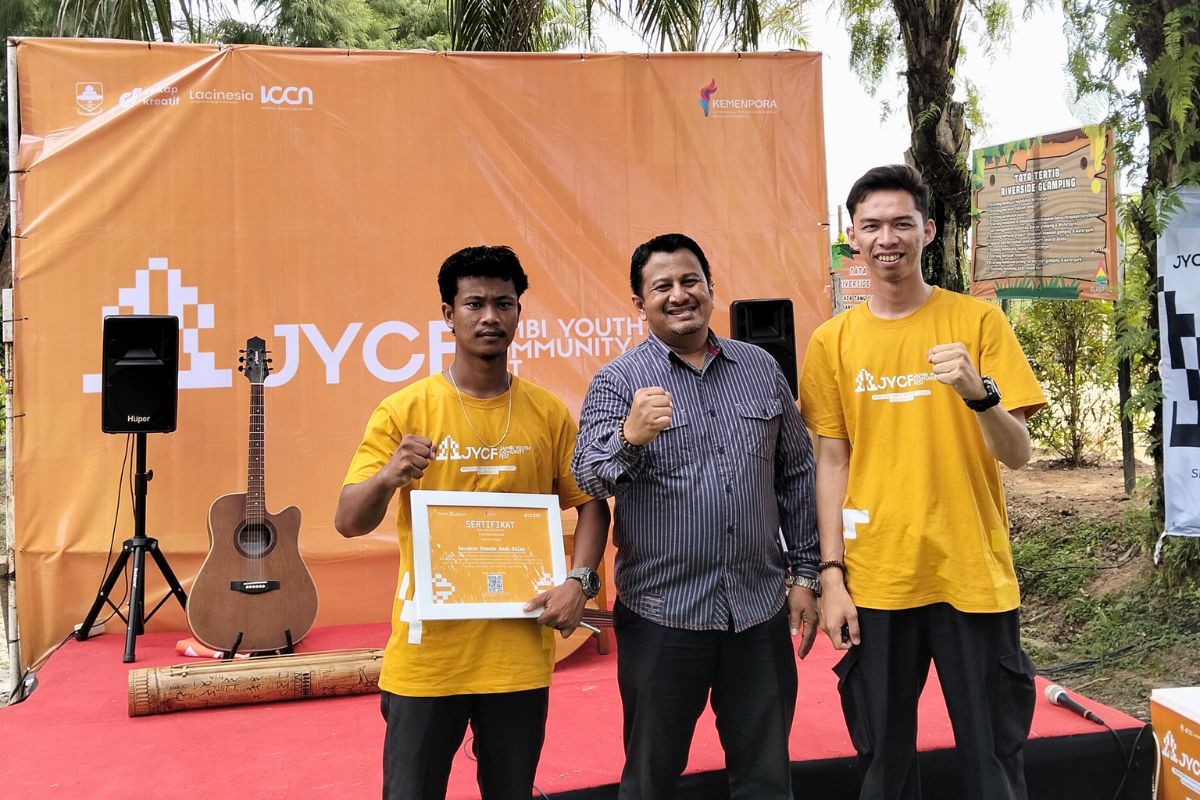
Although the quality of the bamboo cup products is not yet fully optimal, they have begun to be introduced and showcased at various events and bazaars. Recently, Antoni represented his group by presenting bamboo cups crafted by himself and fellow Suku Anak Dalam youth at the Jambi Youth Community Fest 2025, held under the auspices of the Ministry of Youth and Sports. Their participation marked an important step toward wider product recognition, opening opportunities for local wisdom based crafts to reach broader audiences.
At the event, Gerakan Pemuda Anak Dalam, chaired by Antoni, received the Most Impactful Community in Empowerment award. This recognition reflects the collective efforts of Suku Anak Dalam youth in developing crafts rooted in local wisdom while advancing community empowerment and economic resilience.